Forthcoming Book

Foreword (book excerpt)
Immigration is a compelling thrust and enduring paradox of American life and governance. Our nation’s history has been spurred by those arriving and settling on our shores, in our heartland, rural outskirts, and inner cities. Lesser Americans have resisted with vitriol and ruthlessness these “aliens” migrating here to live and attain citizenship. Some machinate the idea of “remigration,” deportation of non-whites back to country of origin regardless of legal status. Greater Americans have received these “strangers” with openness and expectation, thus swelling the denotation of “American.” All Americans should summon their own generational stories of once being outlanders and empathize with war refugees, asylum seekers, and those fleeing poverty and hopelessness…
My father was a teenager who ventured alone to America to make a felicitous life in a new homeland. This book is a tribute to the perseverance of all those pursuing identity and place in America as seen through my father’s absorbing journey…
My father emigrated from Japan in 1924, arriving in Seattle/Tacoma and then worked as a migrant farmworker through Washington, Oregon, and California. Contemporaneously, he was renamed from his birthname of “Masanobu” to “Frank” and then to “George” for the convenience of white overseers. In his elder years, he legalized Frank Masanobu Ogawa. This episodic “reidentification” subsumed his Japanese heritage under a white society rubric but did not facilitate approval as an American. It was a tendentious “embellishment” that could be affixed or detached as the Issei (Japanese immigrants) lived in the half-light of being Japanese and American.
In historical, political, social, and cultural context, this book tells of my father’s striving toward a finer life in America.
Recommended Books

Desire for Life summarizes key therapeutic goals and methods for applying Morita Therapy for counseling persons experiencing severe anxiety-related disorders, including general anxiety, panic attacks, obsessive-compulsive behaviors, phobias, post-traumatic stress, and hypochondria. This book is a concise and authoritative primer for those who want to incorporate Morita Therapy into their professional practice or teaching of Eastern counseling approaches. The hallmarks of Morita Therapy are natural holistic well-being, ecological/contextual healing, and integrative intervention.
Order at https://www.xlibris.com/en/bookstore/bookdetails/596059-desire-for-life or Amazon.com, or www.barnesandnoble.com
Walking on Eggshells is a Morita Therapy primer in the field of addressing domestic violence. No woman should live in fear or be subjected to violent behavior. Walking on Eggshells describes the feelings experienced by many women in abusive relationships. Now, these women have a guide for reclaiming their lives. This book provides positive, practical, and sensitive counsel for women seeking to respond to physical or psychological abuse.
Order at https://www.kendallhunt.com/ogawa

A River To Live By describes the twelve life principles of Morita Therapy that form the powerful currents to create a purposeful lifeway energized with spontaneity and infused with gratitude. Originating in traditional Eastern philosophy and modern Japanese psychiatry, these principles have been adapted to be truly transcultural, timeless, and universal. The reader will be introduced to a strong and sound passage through life's major challenges and day-to-day responsibilities.
Order at https://www.xlibris.com/en/bookstore/bookdetails/575181-a-river-to-live-by
or Amazon.com

Routledge 2018
From the Introduction: "Morita therapy is perhaps the only reliable mental health treatment in the world designed deliberately to bring clients inside the rhythm of our natural environment...An overriding aim of this book is to unearth the essence of Morita therapy and the range of human experiences it addresses. Shoma Morita (1874-1938) designed the therapeutic milieu deliberately to advance his paradoxical and experiential method of therapy. These pages pull Morita's practice back to its bare bones to illustrate the eco-biopsychosocial stimuli that advance wellness." Peg LeVine, Ph.D., Ed.D. is a clinical psychologist and medical anthropologist (www.moritatherapy.net).
Order at: https://www.amazon.com/Classic-Morita-Therapy-Consciousness-Justice/
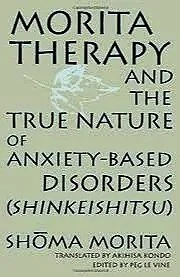
The first English translation of a seminal work, this book presents the progressive nature of Morita therapy across four distinct stages: isolation rest stage, light work, labor-intensive work, and social integration. Essentially, the experiential knowledge the clients gain by moving through the inpatient treatment becomes the therapy. Morita therapy fosters akiraka ni mikiwameru-koto in the client (clear discernment), and a healthy mind/body. Throughout the book, Morita reflects on the theories of his contemporaries such as Sigmund Freud, William James, Mario Montessori, and Jean Charcot.
Shoma Morita published the original Japanese version of this translation in 1928. This English translation was developed by Akihisa Kondo , a practitioner of classical Morita therapy, Zen, and psychoanalysis. Peg LeVine is the only English-speaking person outside Japan practicing the classical four-stage Morita treatment.